An Honest Guide for Job Seekers
If you’ve ever searched for a hands-on job that keeps you active, pays weekly, and doesn’t require a college degree, working at a moving company might have crossed your mind.
The moving industry employs hundreds of thousands of workers across the United States, and there’s a near-constant demand for reliable movers — especially during the peak summer season.
But before you submit your application, it pays to understand what the job actually looks like from the inside.
This guide breaks down what it’s really like to work in the moving industry, drawing on worker reviews, salary data, and insights from some of the biggest employers in the business. Whether you’re looking for a short-term gig or a long-term career in logistics, this is the honest picture you deserve to see.
What Does a Mover Actually Do?
At its core, a mover’s job involves helping customers transport their belongings from one location to another. But the day-to-day reality is much more involved than simply loading boxes onto a truck.
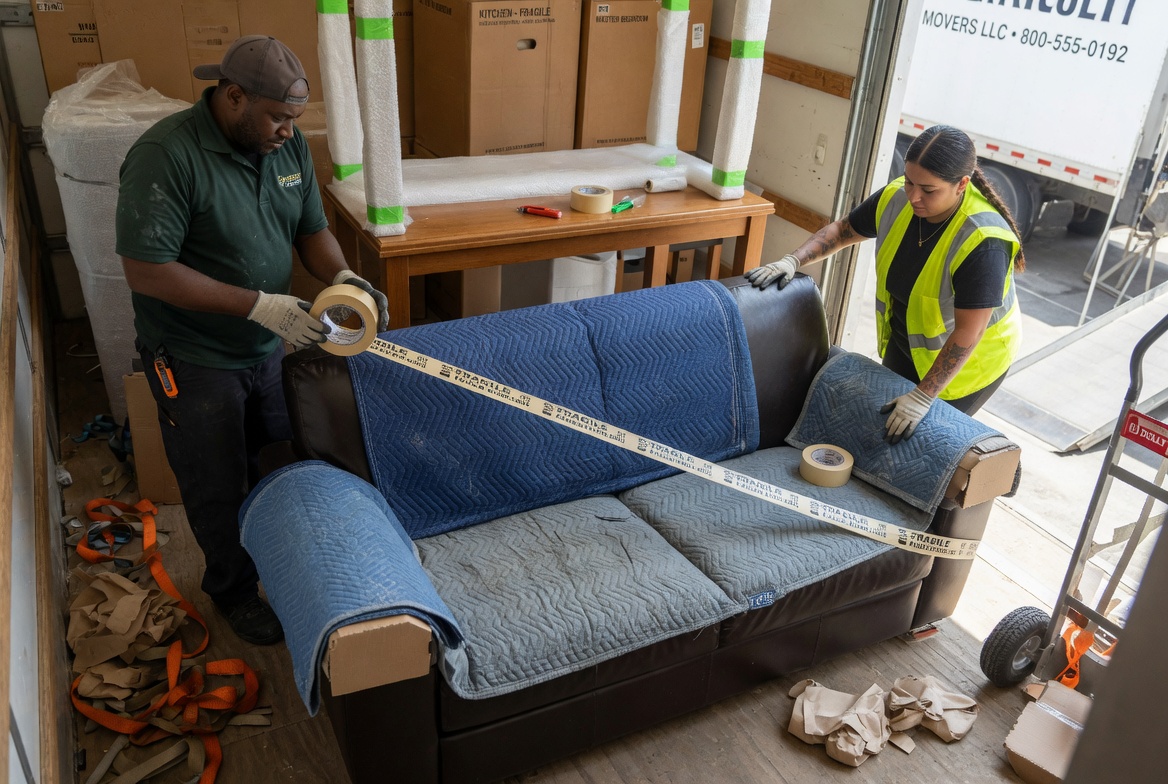
On a typical shift, you’ll show up at the company yard early in the morning — often between 6:00 and 7:00 AM — and get dispatched to one or more jobs that day. You’ll drive or ride in a moving truck to the customer’s home or office, carefully pack and wrap items if required, load everything onto the truck without damage, drive to the destination, unload, and sometimes reassemble furniture. The whole process for a single move can take anywhere from two hours to a full day.
The job is physically intense. You’ll spend hours on your feet, climbing stairs with heavy sofas, navigating tight hallways with refrigerators, and working in weather conditions ranging from summer heat to winter cold. Workers with experience consistently note that proper lifting technique is not just advice — it’s survival. Those who don’t learn to protect their body often don’t last long in the industry.
Beyond the physical side, movers also serve as the face of the company to customers. Good communication, a professional attitude, and careful handling of belongings can make a big difference — not just for the customer experience, but for your own paycheck through tips.
How Much Do Movers Earn?
Pay in the moving industry varies considerably depending on the company, location, and role. According to data from Glassdoor, the average salary for a mover in the United States is around $46,000 per year, or roughly $22 per hour. Salary.com puts the median for professional movers closer to $44,000 annually, with experienced workers earning up to $52,000 or more in high-cost states like California, Massachusetts, and New Jersey.
Entry-level movers typically start between $14 and $17 per hour, while driver positions — which require more responsibility and often a commercial license — can command higher base rates. But here’s the important piece that job postings don’t always make obvious: tips can dramatically affect your actual take-home pay.
Many mover reviews emphasize that tips are a significant part of income. Workers at companies like All My Sons Moving & Storage and College Hunks Hauling Junk describe tip earnings ranging from zero (on a bad day) to $60–$100 or more, split across a crew on good jobs. The issue is inconsistency — tips depend on the customer, the quality of the move, and sometimes factors completely outside your control.
It’s also worth noting that some companies only pay workers for the time they’re physically working at a customer’s location. Travel time to and from jobs, waiting at the yard, and pre-move briefings may not count toward your paid hours — something workers frequently call out as a frustration.
What Employers Are Hiring Right Now?
Here’s a look at the major moving companies hiring movers across the US and what workers say about working for them.
All My Sons Moving & Storage
All My Sons is one of the largest residential moving chains in the country, with operations in dozens of cities and over 1,400 employee reviews on Indeed. The consensus is that it can be a good short-term job for people who need cash quickly and enjoy physical work. One worker wrote:
“Working here is fun if you need some cash and need it quick. Managers are great, and all the workers are really good. Plus, the possible tips for every job are very nice.”
— Indeed reviewer, All My Sons Moving & Storage
However, several reviewers flag concerns about inconsistent hours and a gap between what’s advertised and what workers actually earn. Those who stay long enough to build relationships with dispatchers tend to get more consistent work.
College Hunks Hauling Junk & Moving
College Hunks (CHHJ) is a well-known national franchise with a strong brand around positive culture. On Glassdoor, CHHJ holds a rating of 3.5 out of 5 based on over 600 reviews. About 53% of employees would recommend the company to a friend.
“The people are great and the people you meet are great. We have a great culture and we actually have fun in our roles. Good tips on the moving side — $60–90 per day on average.”
— Glassdoor reviewer, College Hunks Hauling Junk (Captain role)
One of the most useful things to understand about CHHJ is that it’s a franchise model — your experience is heavily determined by who owns the specific location you work for. For students or part-time workers, it’s frequently described as one of the better options in the industry.
Moving Team Six Moving and Storage
Moving Team Six positions itself as a premium residential and commercial moving service with an emphasis on precision and reliability. Workers tend to highlight better organization and a more structured workflow compared to high-volume franchise operations, along with a tighter-knit team culture.
Bridges Bros Movers
Bridges Bros represents a regional operation that built its reputation one move at a time. Workers at regionally focused companies like this often describe closer relationships with management, more transparent communication about pay, and a stronger sense of being valued as individuals rather than part of an interchangeable labor pool.
Affordable Movers
Companies that compete on price often run leaner operations — which can mean fewer crew members per job and higher physical demands per worker. That said, volume is typically high and work is rarely scarce during peak season. Workers considering this type of employer should ask detailed questions about crew sizes and pay structure before accepting an offer.
Caring Transitions
Caring Transitions occupies a unique niche — its entire focus is on older adults transitioning to smaller homes or assisted living. The work is typically less physically intense than standard residential moving, but requires patience, empathy, and strong interpersonal skills. For workers who want to make a tangible difference in people’s lives, this is a genuinely distinctive option.
People First Staffing
Using a staffing agency like People First Staffing gives job seekers the flexibility to try out multiple companies and work environments before committing to a single employer. Agency workers are placed at client companies on a temporary or temp-to-hire basis — a useful entry point into the industry.
The Honest Pros and Cons of Working in Moving
Pros:
- No degree required — most companies hire with a high school diploma and clean background check
- Physical fitness comes with the job, without paying for a gym
- Tips can significantly supplement base pay on good days
- High demand — moving companies are almost always hiring
- Weekly pay helps with budgeting
- Every day is different — new locations, new customers, new challenges
Cons:
- Physical wear and tear is real — proper lifting technique is essential from day one
- Hours are inconsistent, especially in winter months
- Tips are never guaranteed — don’t budget around them
- Some companies don’t pay for travel time or pre-job waiting periods
- High turnover can create unstable team dynamics
How to Find Mover Jobs Near You
The moving industry offers real opportunity for people who approach it with realistic expectations. The physical demands are significant, the pay varies widely, and the experience depends heavily on which company and location you join.
You can browse current mover and logistics job listings — including positions at all the companies mentioned in this article — at jobs-in.us/logistics/mover. The platform covers opportunities from regional carriers to national franchises, making it easy to compare options and find the right fit.
Do your research, ask the right questions, and choose a company whose practices match what matters to you. The right moving job might be closer than you think.

