Every long-distance move comes down to the same question once the boxes are packed: What do you do with the car?
Driving feels cheaper on paper, but once you add fuel, hotels, food, mileage depreciation, and three to five days of your life, the math shifts quickly.
Neither option wins on distance alone. Compare your driving budget with written transport quotes, your own travel costs, and the time you can spare.
Use the worked example below as a budgeting method, then replace the assumptions with prices for your vehicle, route, and travel dates.
The True Cost of Driving Your Car Across the Country
Illustrative budget, reviewed November 2026: a 2,500-mile drive in a vehicle averaging 28 mpg uses about 89 gallons. If you assume gas costs $3.40 per gallon, fuel is about $305. The fuel price is an example, not a current national average. Use the DOE and EPA fuel-economy trip calculator with your own vehicle and fuel price.
Add:
- Example lodging allowance for 3–4 nights: $450–$700; replace with your actual bookings
- Example meal allowance: $200–$300; count only extra spending when comparing with meals you would buy anyway
- Vehicle wear and depreciation: estimate separately for your car. An IRS standard mileage rate is a tax-calculation rate, not a measured wear-only cost for this trip. Do not add a full mileage rate to fuel and call the result vehicle wear.
- Example driving schedule: 4–5 days, depending on rest breaks, weather, route, and driver availability
With those assumptions, fuel, lodging, and meals total about $955–$1,305 in cash spending. Add tolls, parking, any additional lodging, and your vehicle-specific wear estimate separately. Time off work or lost income belongs on its own line. This is not a universal all-in cost or a tax deduction calculation.
How to Compare Door-to-Door Car Shipping Quotes
Get written quotes for the same vehicle, route, dates, and open or enclosed service. Compare the full price, any broker fee, payment terms, pickup window, delivery estimate, and cancellation terms. Add your airfare or other personal travel, local transport, and any rental-car cost while your vehicle is in transit.
Door-to-door service depends on safe legal truck access; you may need to meet the driver nearby. Confirm pickup and delivery windows in writing and plan for delays rather than treating an estimate as a guaranteed arrival date.
Ship Car vs. Drive — Side-by-Side
| Factor | Drive it | Ship it |
|---|---|---|
| Cash budget for the example | About $955–$1,305 for fuel, lodging, and meals, plus tolls and parking | Written vehicle-transport quote plus your own travel and any temporary transport |
| Your time | Example: 4–5 driving days | Booking, inspection and handover time, plus your own travel |
| Vehicle mileage | About 2,500 miles for this route | Usually limited to loading and local handover |
| Wear and depreciation | Estimate separately for your vehicle | Less driven mileage, but handling and transit risks remain |
| Timing and damage risk | Plan for weather, fatigue and breakdowns | Confirm delivery windows, exclusions and the damage-claim process |
Your Drive-or-Ship Worksheet
Fill in both columns with your own route, bookings and written quotes. Keep the cash lines and the days lines separate, so a low price does not hide a lost week, or the other way around.
| Line | If you drive | If you ship |
|---|---|---|
| Fuel | Route miles divided by your car’s mpg, times the fuel price | Little or none |
| Lodging | Each night on the road | Any night you wait for a flight or for delivery |
| Extra meals | Only spending above your normal food budget | Travel-day meals |
| Vehicle transport | None | Written quote, including any broker fee |
| Your own travel | Part of the drive | Airfare, bag fees and airport transport |
| Getting around until the car arrives | Not needed | Rental car, rideshare or transit |
| Tolls and parking | Along the route | At the airport and at handover |
| Wear and depreciation | Your own estimate for the added miles | Few added miles |
| Total cash | ||
| Days away from work | Driving days plus a weather buffer | Travel day plus pickup and delivery appointments |
Using the example above, the drive came to about $955 to $1,305 in fuel, lodging and meals over 4 to 5 days. If your transport quote, flight and local rides add up to a similar amount, the days you get back may decide it. If they add up to much more, ask whether those days are worth the difference to you. For other ways to cut the cost of the whole move, see what’s the cheapest way to move cross country.
When Driving Still Makes Sense
- Shorter routes, where the drive takes a day or two and lodging costs stay low
- You genuinely want the road trip
- Your vehicle is older, and you don’t mind the miles
- You’re moving solo with no flight to coordinate
When to Hire an Auto Transport Company
- Long routes where the written shipping quote and your own travel costs compare favorably with driving
- Multiple vehicles
- Classic, luxury, or low-mileage cars
- Schedules that allow the quoted pickup and delivery windows, with a backup plan if your car arrives late
- Families flying to the new home
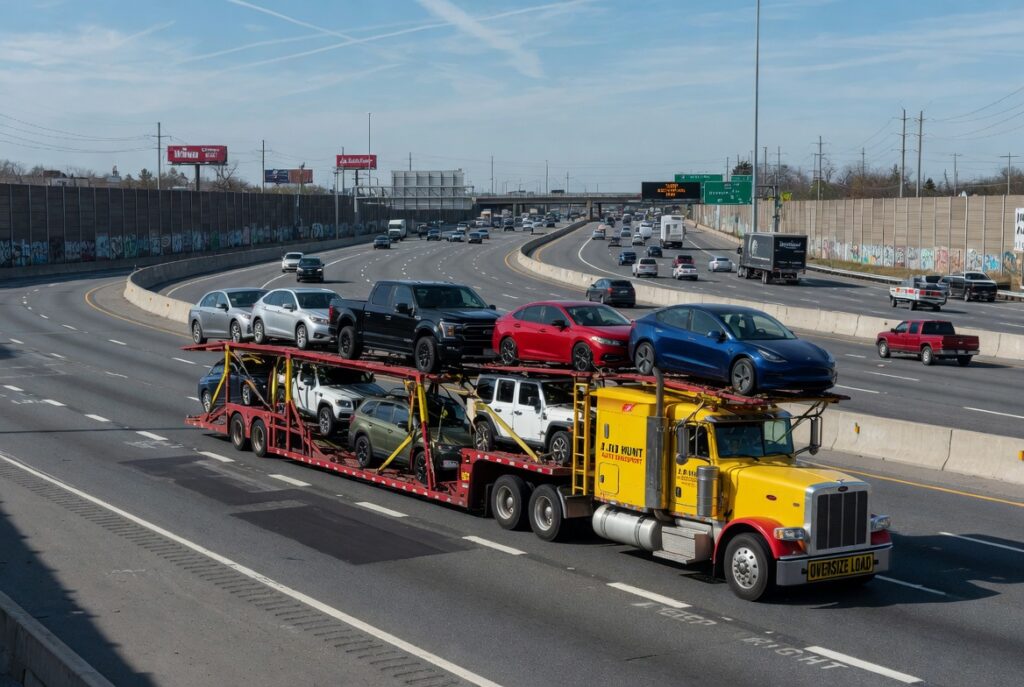
For a long-haul move, an auto transport company may save you driving time. Compare written terms, confirm whether you are booking with a broker or carrier, and request evidence of current authority and insurance. Registration is one check, not a guarantee of service quality; see FMCSA guidance on USDOT registration.
Frequently Asked Questions
How much does it cost to ship a car cross-country?
Request written quotes for your exact route, vehicle, and dates. Vehicle size and condition, open versus enclosed transport, season, and pickup flexibility can affect the offer. Compare the complete price rather than relying on a nationwide range.
How long does cross-country car shipping take?
Ask each provider for a written pickup window and estimated transit time for your route. Account for time before pickup and possible delays; use a guaranteed date only if the contract expressly provides one.
Is shipping a car safe?
Transport can reduce the need to drive, but it does not eliminate damage risk. Confirm the actual carrier, current insurance, coverage limits and exclusions, deductibles, and the claim process. Photograph your vehicle and record its condition at pickup and delivery.