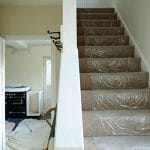
If you have chosen to take some of your furniture pieces with you to the new home, then you should be perfectly aware that moving furniture, especially any big and heavy units, is never a joke. If you hire help, include floor protection and clear access routes in your pre-arrival preparations for the movers.
When you attempt to move bulky furniture items without the assistance of experienced furniture movers, you could end up damaging the floor in some way.
For your information, floor damage is one of the most common types of property damage during a house move. Regrettably, it’s one of the most expensive to fix as well.
During a move, floors can get damaged in several ways: scratches, dents, scrapes, and scuffs.
For instance, polished hardwood floors are very susceptible to damage due to their delicate top finish. Tiled floors can also get ruined in an instant if a heavy furniture piece drops on them with great force.
Not only is floor damage costly to fix but it’ll also take a lot of time until things get back to normal. And this is exactly why you must do whatever it takes to avoid any type of floor damage when moving furniture.
Read on to learn how to move heavy furniture without scratching the floor.
Table of Contents
1. Secure enough manpower on Moving day
One thing is clear – you cannot and should not attempt to move your large furniture items entirely on your own – it’s just too risky.
Your decision not to hire professional furniture movers is justified as long as you know that your good friends will give you a hand with the heavy furniture lifting on Moving day.
It’s easy to guess that the more helpers you manage to secure for the day of the move, the less risk there is of your floors getting scratched.
With enough people, heavy pieces can be carried clear of the floor, which lowers the chance of a scrape. Plan where each piece will be set down, because marks often happen when a piece is put down or pivoted rather than while it is carried.
See also: How to get friends to help you move
2. Disassemble your large furniture
Be sure to disassemble your largest and heaviest pieces of furniture – beds, dressers, cabinets, etc. – before taking them outside the home and loading them into the moving truck.
The process of furniture disassembly will make the units lighter, meaning they will become easier and safer to handle. Also, the furniture items will be smaller in size, meaning that you’ll be able to maneuver them around the place without any concerns about costly property damage.
NEVER drag furniture pieces along the floor if they prove to be too heavy to lift and carry. There are several good ways to handle the situation, and you should always start by removing any parts of the units that can be detached safely.
Might come in handy: How to disassemble a couch for moving
3. Pad heavy furniture pieces with blankets
Scratches on the floor can appear when the edges or legs of tables, desks, couches, chairs, dressers, and so on, get into contact with hardwood floors or laminated floors.
If any of those furniture pieces are dragged along the surface of the floor, even for a short distance, then the floor is very likely to get scratched as a result.
One good way to prevent such type of floor damage is to wrap the legs and edges of heavy furniture in padding blankets (aka furniture blankets). This way, even if a piece gets accidentally into contact with the delicate floor, the latter won’t be damaged in any way.
If you don’t have any furniture blankets at the moment, you can use towels or rags as makeshift padding materials.
Good to know: How to pack furniture for moving
4. Take advantage of furniture sliders
How to move furniture by yourself without scratching the floor?
The answer is simpler than you think – use furniture sliders.
Furniture sliders are pieces of hard and durable plastic (or rubber) on one side (for carpeted floors) or spongy felt material on the other side (for hard floors).
And since you’ll be worried about scratching your hardwood floor, then you should get the ones that are designed to work best on hard floors.
The main goal of furniture sliders (aka gliders) is to reduce the friction between heavy furniture and the floor, so you can slide a piece across a room instead of dragging it. That lowers the risk of scratches, but grit under a slider can still mark the finish.
To place them, tilt the piece slightly while a helper slips a slider under each leg or corner, felt side down on hard floors. Wipe the felt and the floor first, push slowly from the lower half of the piece, and stop to check the sliders every few feet.
Read also: How to use furniture sliders to move furniture and appliances
5. Consider using shoulder moving straps
Another way to make sure your heavy furniture will not touch the floor during the actual moving process is to use shoulder moving straps to carry the bulky pieces.
Shoulder moving straps – also known as a shoulder dolly – let you lift and carry heavy furniture with relative ease by using your body’s leverage and strength.
Those straps distribute the weight of the furniture units evenly on the shoulders so that you can move them safely and without straining your back too much. Of course, you’re going to need at least one other helper to use shoulder lifting straps correctly while taking the bulky furniture outside the house.
The great thing about shoulder moving straps is that they will reduce the risk of injuries and possible floor damage of any sort.
Read also: How to use shoulder moving straps
6. Use a furniture dolly
Without a doubt, the best way to move furniture without scratching the floor is to use a furniture dolly.
The furniture dolly has a flat, wide base made of wood or steel and four swivel wheels underneath. It’s a piece of moving equipment that doesn’t look fancy in any way but its extreme usefulness has been proven over and over again.
The four-wheel dolly is ideal for moving large and heavy furniture items such as dressers, desks, wall units, couches, and so on. A loaded dolly still puts the full weight on four small wheels, and grit on the wheels can mark a floor, so wipe the wheels first and roll over runners where you can.
Keep in mind, though, that a furniture dolly cannot be used on stairs.
Must-read: The moving dolly: What is a dolly and how to use it?
7. Position large cardboard sheets on the floor
Another excellent way to keep your floors scratch-free during the house move is to place large sheets of thick cardboard on the floors to keep them protected at all times.
This floor protection method, mind you, is the cheapest way you can move furniture without scratching the floor simply because you are very likely to have leftovers of discarded cardboard lying around. In this case, all you need to do is put those cardboard sheets to good use on the day of the move.
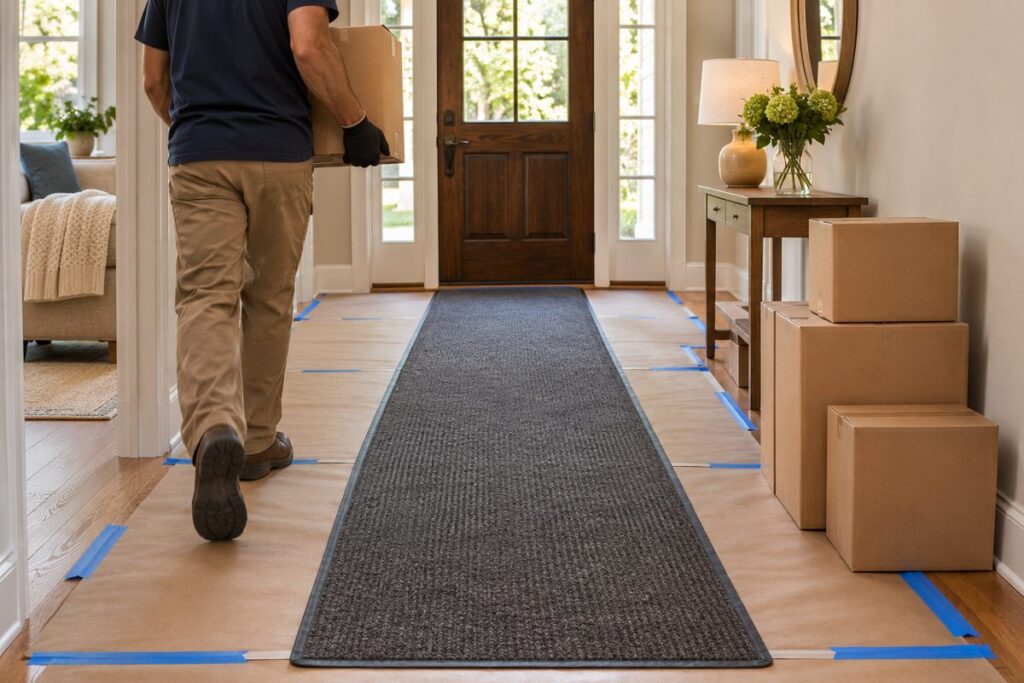
Simply break down several cardboard boxes and use the material to create a safe passageway for your large and heavy furniture. For added safety, use painter’s tape to fix the cardboard sheets in place and prevent them from moving around.
See also: The many uses of cardboard when moving
8. Place plywood sheets on the floor
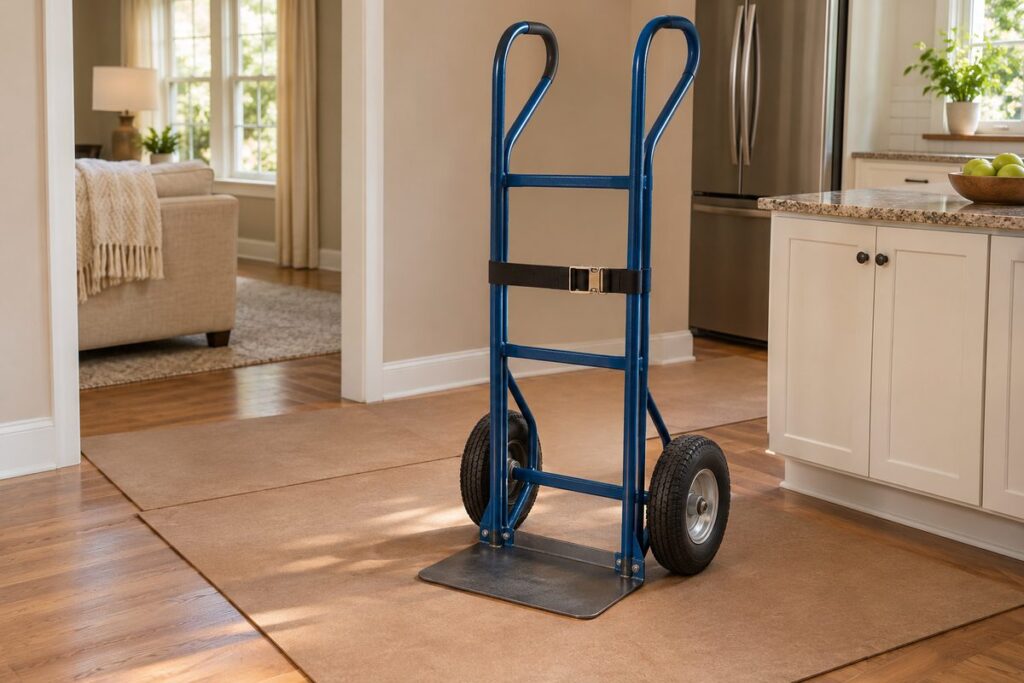
A serious step up of using cardboard sheets to keep your floors from getting scratched is to position hard plywood sheets on the floor.
Plywood sheets will provide an outstanding level of floor protection. However, as you can easily guess, such sheets will be expensive so you have to assess whether the investment is worth it at all.
Cardboard costs little or nothing, so it is the sensible default for most rooms. Plywood or hardboard is worth the cost on long routes, under very heavy items such as appliances, or where a dolly will roll over the same path many times. No covering makes damage impossible, so keep the route clean and lift rather than drag.
9. Use the right furniture lifting techniques
In most cases, you’re going to have to lift and carry your light furniture (chairs, small tables, etc.) and medium furniture (sofas, desks, etc.).
What this means is that you have to be familiar with safe furniture lifting techniques to prevent dragging those heavy pieces along the floor.
- Keep a stable base with your feet before lifting heavy furniture. As a rule of thumb, your feet should be shoulder-width apart.
- Keep a proper back posture to prevent bad back injuries. Always have your back straight, shoulders back, and your head looking straight ahead.
- Bend your knees, NOT your back. This is really, really important. Bending your knees will let you use the strongest muscles in your body – the leg muscles.
- Keep a firm grip on the furniture items before lifting them. Make sure you wear quality work gloves that will improve greatly your grip.
Must-read: 10 Proper lifting techniques for moving heavy furniture
Match the protection to your floor
| Floor type | What works | What to avoid |
|---|---|---|
| Hardwood and engineered wood | Felt-bottom sliders, padded legs, a clean dolly rolled over cardboard or hardboard runners | Dragging, hard plastic sliders, grit under anything that moves |
| Laminate and vinyl plank | Felt sliders, cardboard or hardboard runners, lifting the heaviest pieces | Dragging, rubber pads that can leave scuff marks, narrow legs or wheels resting in one spot |
| Tile and stone | Runners or plywood along the path, extra padding where pieces are set down | Dropping heavy items, dolly wheels catching on grout lines and tile edges |
| Carpet | Hard plastic sliders, which glide better than felt on carpet | Felt sliders, which grip carpet fibers |
| Stairs | A professional crew for heavy pieces | Loose cardboard or plastic sheeting on the steps |
Three hazards that covering the floor does not fix
- Grit. Sand and dirt trapped under a slider, a dolly wheel or a runner grind into the finish. Sweep or vacuum the whole route first and wipe sliders and wheels before each use.
- Adhesives. Tape runners to each other rather than to the floor where you can. If you must tape to the floor, use painter’s tape, test it in a hidden spot first and remove it the same day.
- Trip hazards. Cardboard and sheet edges curl and slide. Tape down the edges, keep runners flat and off stairs, and clear boxes and cords from the path before anyone lifts.
10. Hire furniture movers
Now you are familiar with several excellent ways to move furniture without scratching the floor.
Be sure to combine some of those floor protection methods to achieve a maximum level of safety.
For example, asking your friends to help you move your furniture (Method 1) does NOT exclude renting a furniture dolly (Method 6), laying sheets of thick cardboard on the floor (Method 7), AND using the proper furniture lifting techniques (Method 9) to prevent accidents and injuries.
Hire help when the route includes stairs, a piece is too heavy or awkward for the people you have, or the floor would be costly to repair. Ask the movers how they protect floors and whether runners are included in the price. To compare local crews, request quotes from furniture movers in your area.